An automation showroom can show you how to turn on a light, adjust the temperature or activate a scene. But at Zennio, we always aim to go further.
We wanted to create a space that demonstrates how automation can truly transform an environment. Because technology offers far greater possibilities when it is not treated as an addition at the end of a project.
For architects, interior designers, system integrators and any professional involved in designing a space, considering automation from the very beginning means making it an integral part of the design process: adapting spaces to different moments and uses, coordinating their various elements and unlocking possibilities that would be difficult to achieve once all the other decisions have already been made.
Patricia Bustos: One of the Leading Figures in Spanish Interior Design
To bring this vision to life, we wanted to work with someone capable of taking it even further. That is why the showroom’s interior design bears the signature of Patricia Bustos, one of the most renowned figures in contemporary international interior design.
Founder of Patricia Bustos Studio, she has developed a distinctive and instantly recognisable creative language through her use of colour, light, shapes and materials, with an approach to interior design that seeks to evoke emotions and transform the way spaces are experienced.
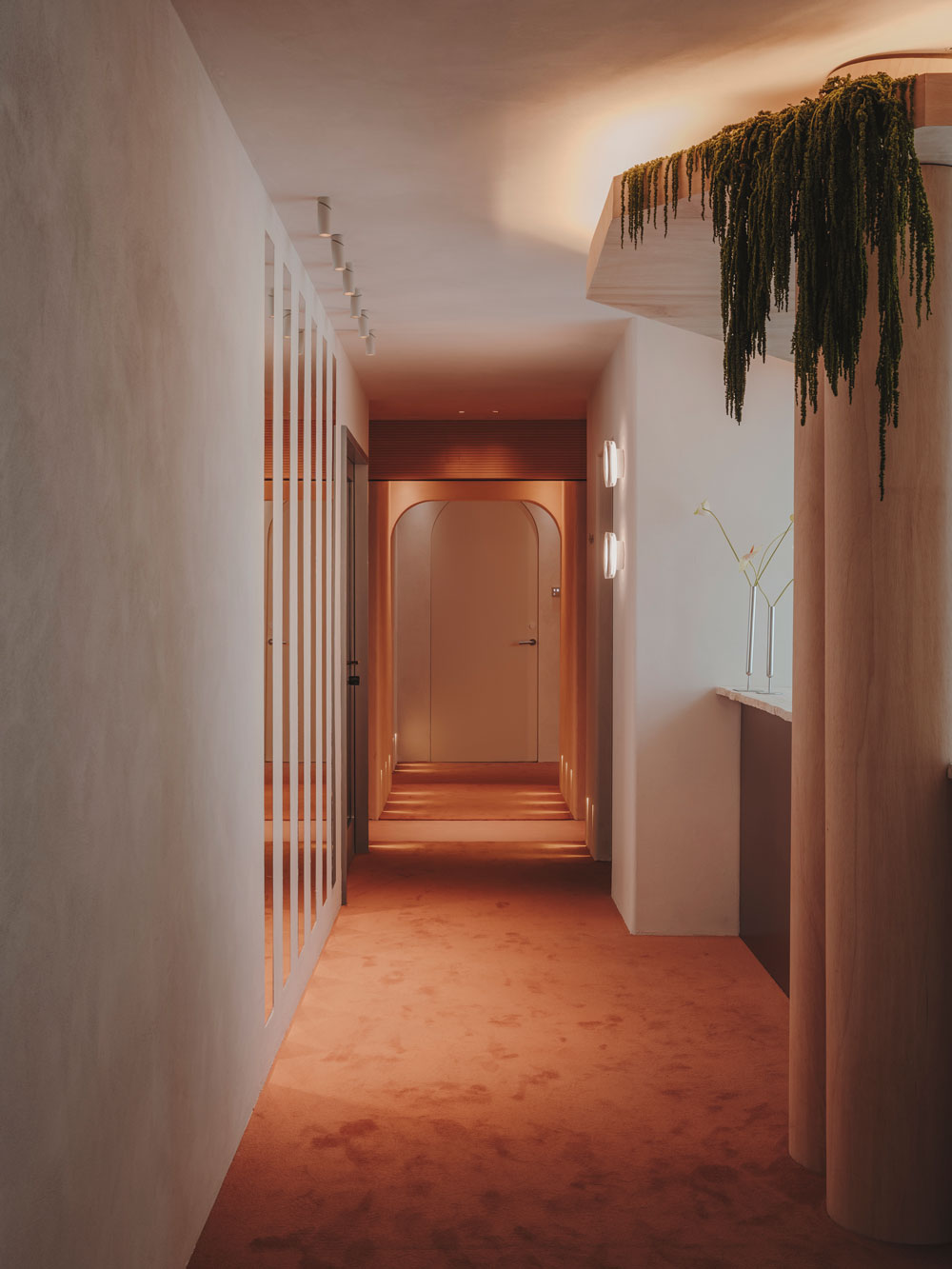
Working with Patricia on this project was therefore about much more than aesthetics. Her approach to interior design was perfectly aligned with what we wanted to demonstrate: that an interior is not something static, and that technology can play an active role in creating different atmospheres and experiences.
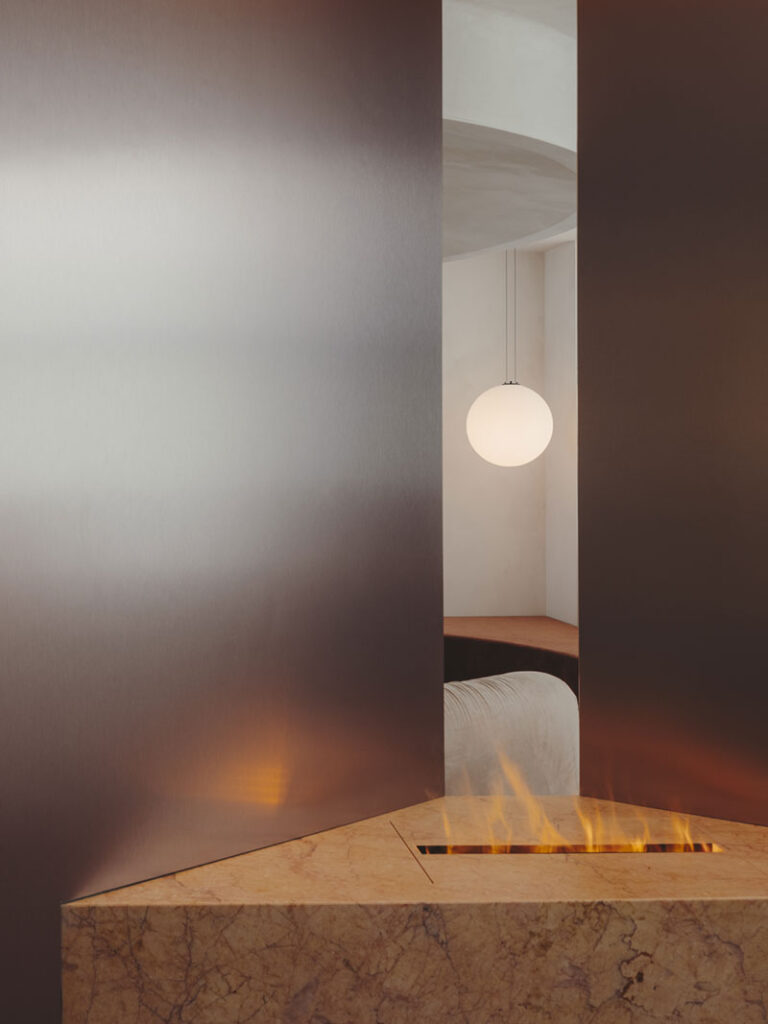
In the showroom, materials, textures, lighting, colour and automation have been conceived together. Technology is not an additional layer introduced once the project is complete, but another design tool that Patricia has been able to work with from the very beginning.
A single space can take on different atmospheres, adapt to different moments and respond to the needs of the people using it. And the solutions that make this transformation possible become part of the interior design itself, not only through their functionality, but also through their placement, finishes and relationship with the surrounding materials.
Different Spaces, Different Ways to Experience Technology
Throughout the showroom, Zennio technology is integrated into a variety of settings and applications, allowing visitors to experience how our interaction with a space changes according to its characteristics and requirements.
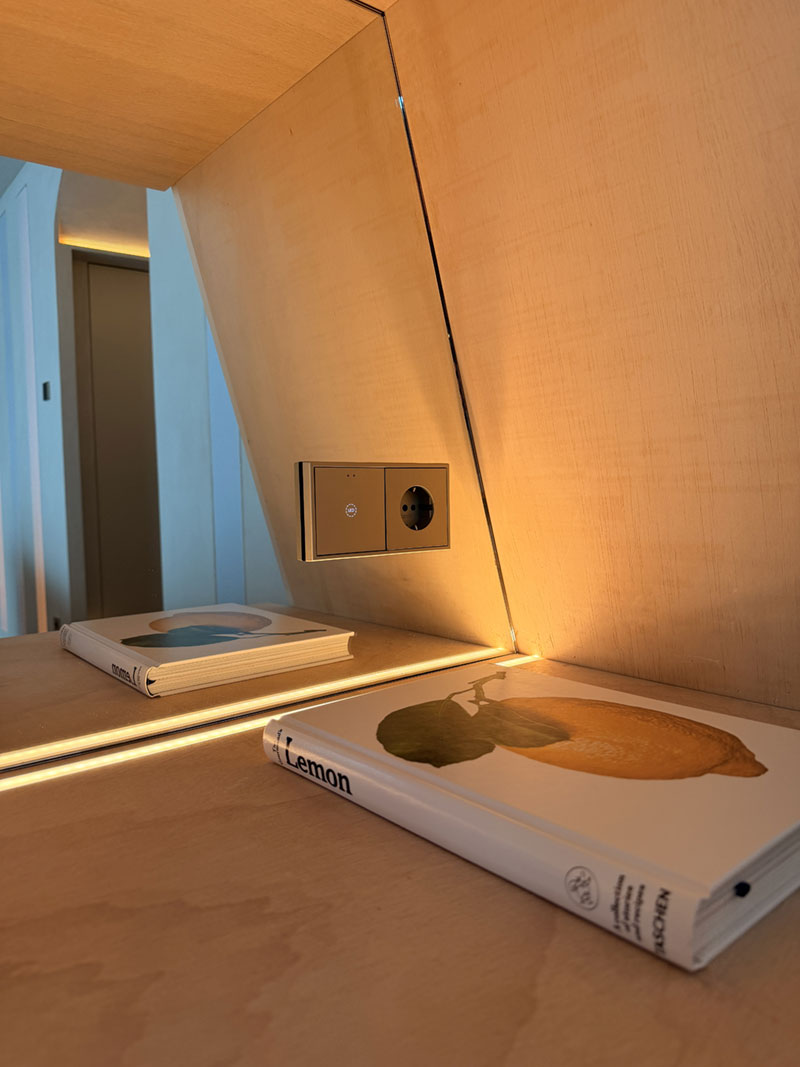
Among the different types of spaces, the CX touchscreen range takes centre stage. CX40 and CX50, measuring 4 and 5 inches respectively, allow the main room functions to be managed from a single touchscreen interface. In a more hospitality-oriented setting, the compact 3.3-inch CX33 can be integrated into a headboard alongside other elements, such as sockets or switches, bringing the functions guests need within easy reach.
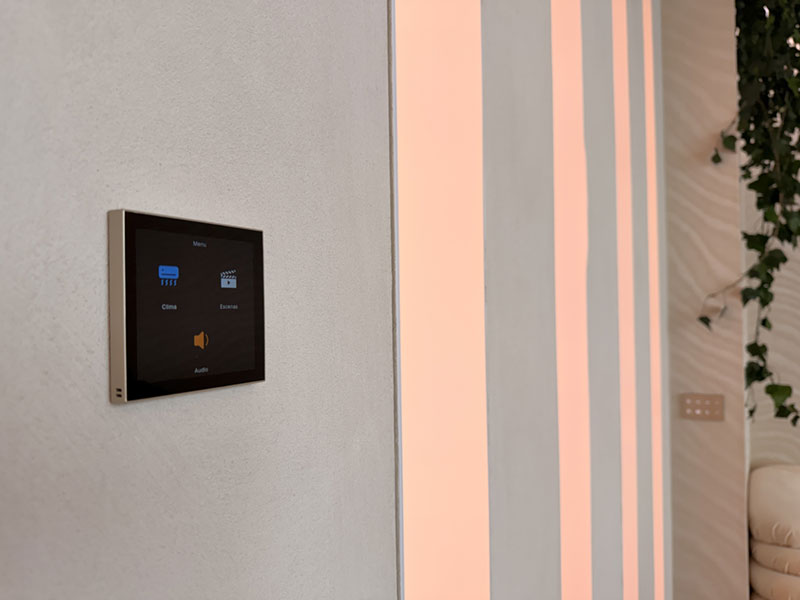
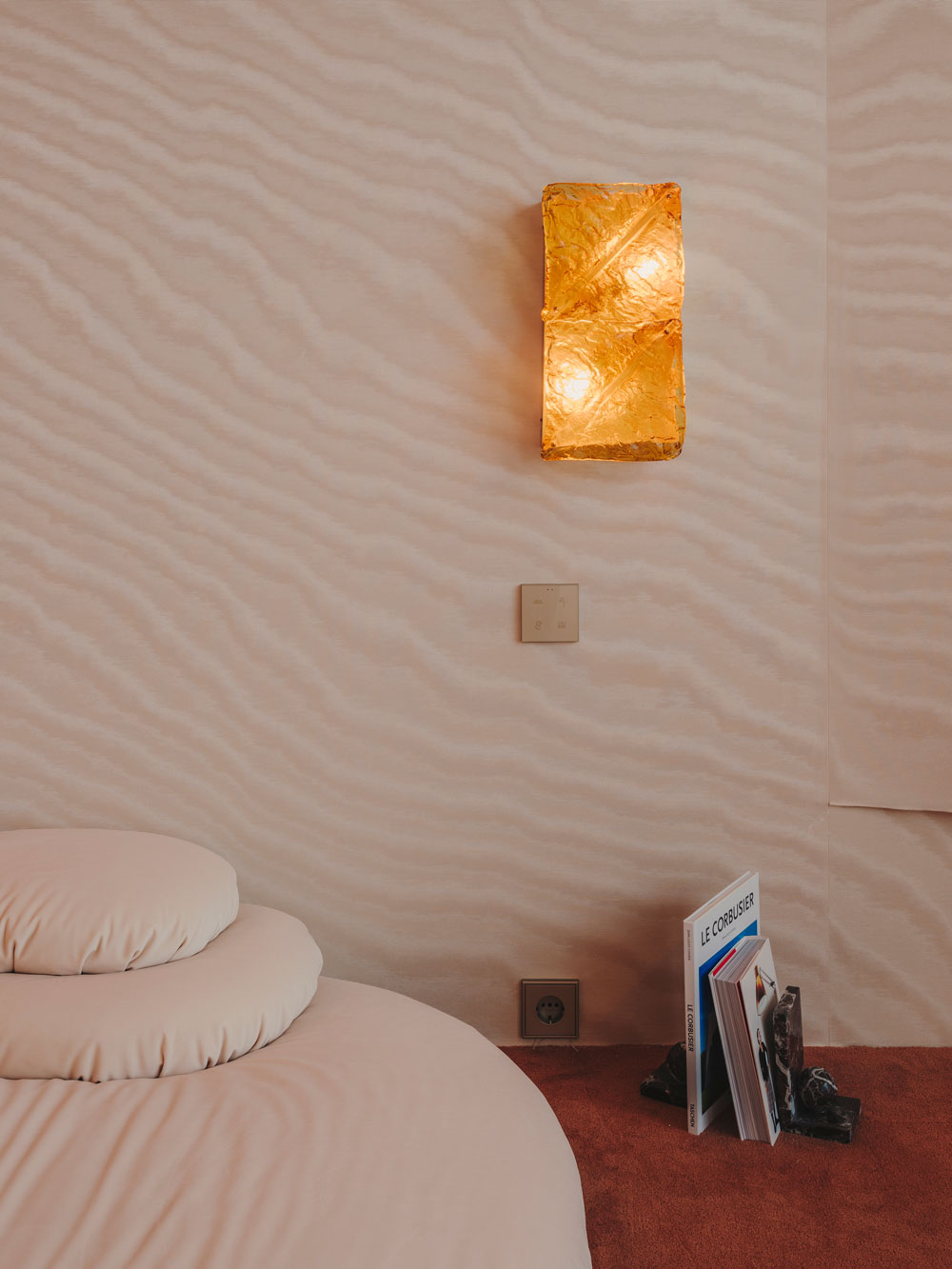
The showroom also highlights the possibilities offered by Flat and Tecla capacitive touch switches, two ranges that share the same functionalities, button configurations, customisable icons and RGB backlighting. Their main difference lies in their design: while Tecla is made entirely of polycarbonate, Flat features a fully customisable glass front that can even be printed with personalised designs. Two ways of incorporating the same control capabilities, with different finishes and levels of customisation.
Soft push buttons offer an alternative to capacitive control. Their smooth, silent mechanical operation provides a more traditional way of interacting with the installation, while maintaining a refined appearance that integrates naturally into the overall design.
The ZS55 and ZS70 switches and sockets ranges allow push buttons, power sockets, USB chargers and various connections to be combined while maintaining a consistent aesthetic throughout the project. The ZS70 series, with its 70 × 70 mm format, is particularly appealing to architects and interior designers thanks to its proportions, design and the possibilities it offers for creating compositions that integrate naturally into a space.
Meanwhile, the Z50 and Z100 touchscreens provide comprehensive control of the installation. Available in 5- and 10-inch formats respectively, they allow the various functions of a space to be managed through a single interface, adapting both visualisation and control to the requirements of each project.
Beyond the devices integrated throughout the showroom, a dedicated area presents Zennio’s product portfolio organised by categories and series, making it easier to compare alternatives and discover further possibilities for different types of projects.
But the showroom is not simply about displaying Zennio solutions. It also allows visitors to experience how automation can transform a space.
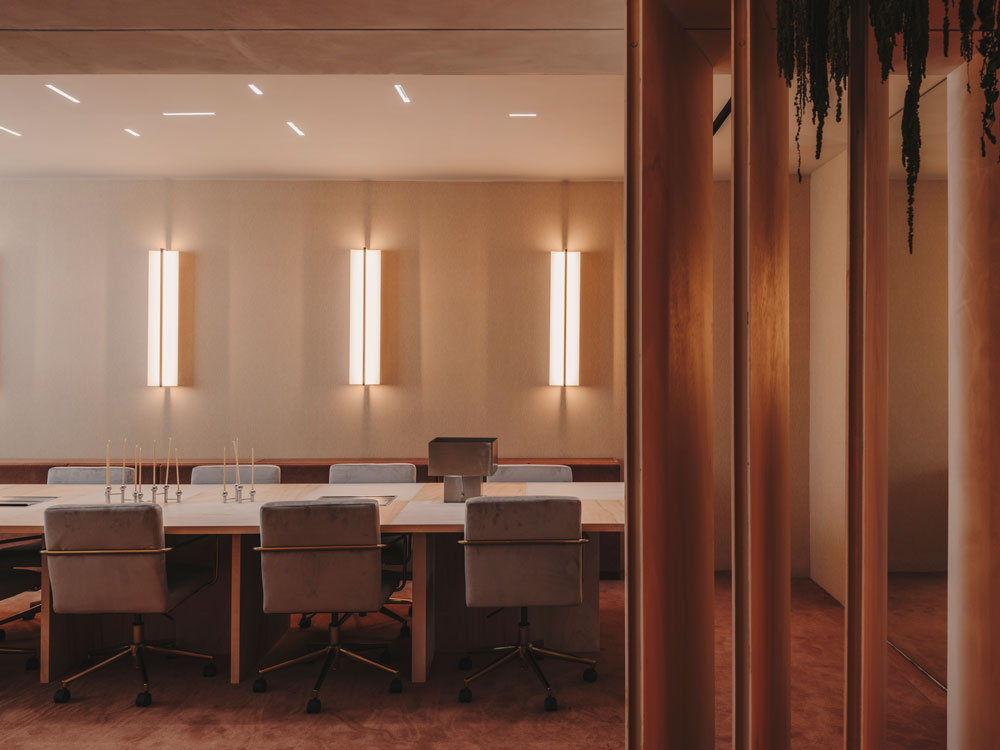
One example is Human Centric Lighting (HCL), integrated with the Zennio system in several areas of the showroom. Visitors can experience how light intensity and colour temperature adapt to different times of day and activities, such as working, relaxing or resting. This demonstrates how intelligent lighting can contribute to well-being and transform the atmosphere of a single space.
A visit therefore offers something that is difficult to achieve through a website or technical datasheet alone: seeing products in context, interacting with them and comparing different options before deciding how to incorporate them into a space.
A Meeting Point for Projects from Around the World
But the Zennio Showroom was not created solely to experience our solutions.
Since opening, we have already welcomed international clients and partners, and we want this to become a fundamental part of its identity: establishing the showroom as a meeting point for Zennio professionals from different markets.
Architects, interior designers, system integrators, partners and clients can use the space to discover our solutions first-hand, find inspiration, exchange ideas with our team or arrive with something much more specific: a project to discuss.
A visit can be an opportunity to discover products they have never had the chance to experience in person, explore new applications, work directly with our team and take those ideas back to a hotel, home, office or any other type of installation anywhere in the world.
We want it to be a place that brings together products, knowledge, projects and people.
There’s One Part We’d Rather Not Show You
We could end this article with a gallery of photographs showing every room.
But we won’t.
Because revealing the entire showroom would take away an important part of its purpose.
Throughout this article, you’ve seen products, compositions and glimpses of the project. But this space was created to offer something that photographs cannot convey: interacting with a touchscreen, feeling a push button, comparing finishes and, above all, experiencing how automation can transform an environment and the way people live in it.
That’s why we’d rather you discover the rest in person.
The Zennio Showroom is located at Príncipe de Vergara 37, Madrid, Spain.
If a project, a meeting or an upcoming trip brings you to Spain, we would love for this to become your meeting point with Zennio too.
Book your visit:
https://www.zennio.com/Europa/showroom-madrid/